
Create Prepayment Schedule
Overview
The Prepayment Wizard is designed for the journal needs of the non-account type user. In creating a prepayment schedule, you must carefully identify the items you would enter as prepayment. It is good to inquire people who might know of any unearned revenue.
Steps
- From the Accounting module, select Prepayment > New Prepayment button from the menu options. The Prepayment Wizard will display.
Step 1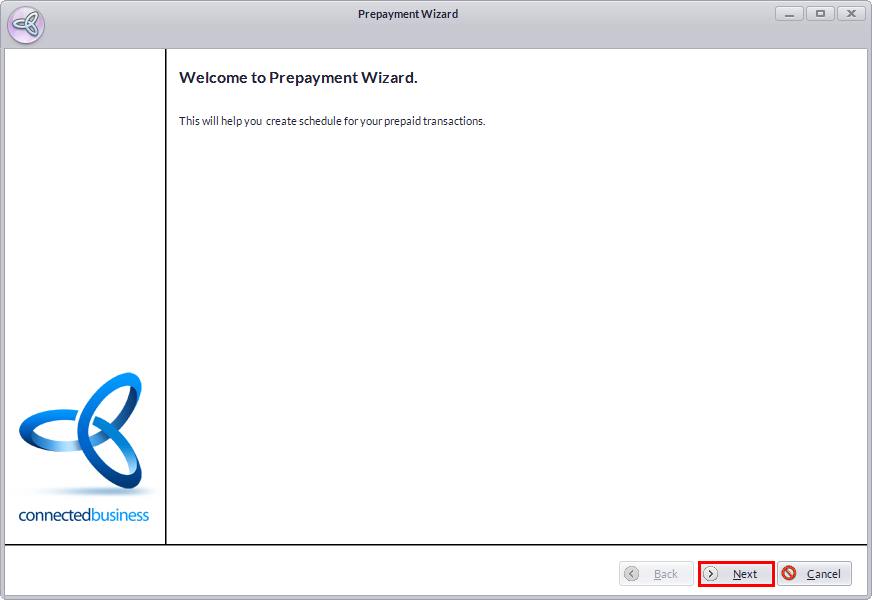
Click Next button to start.
Step 2- The Prepayment Code will be autogenerated.
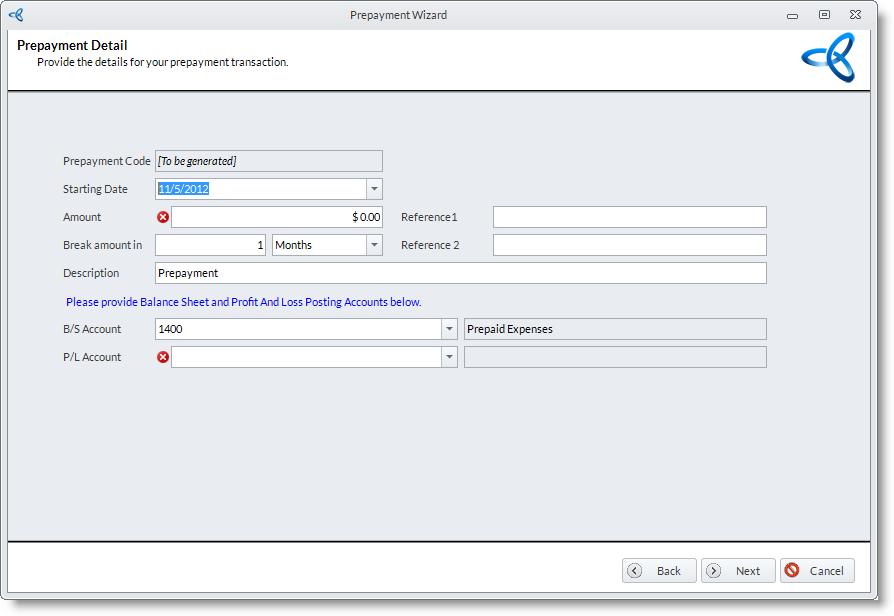
- Enter the starting date of the prepayment in the Transaction Date field. By default, this is set to the current date.
- Enter the whole prepaid amount in the Amount field then specify the number of times that the prepaid amount will be divided in the Break Amount in field.
- The References 1 field denotes the related records that the prepayment was based on. TheReference 2 field denotes the entity that initiated the prepayment.
- Enter a Description for the prepayment. By default, this is set to "Prepayment".
- Select the balance sheet posting account for the prepayment in the B/S Account field. By default, this is set to the default Prepayment account.
- Select the profit and loss posting account for the prepayment in the P/L Account field. Select the revenue or expense account to where the prepayment is applied.
- Click on the Next button to continue.
Step 3
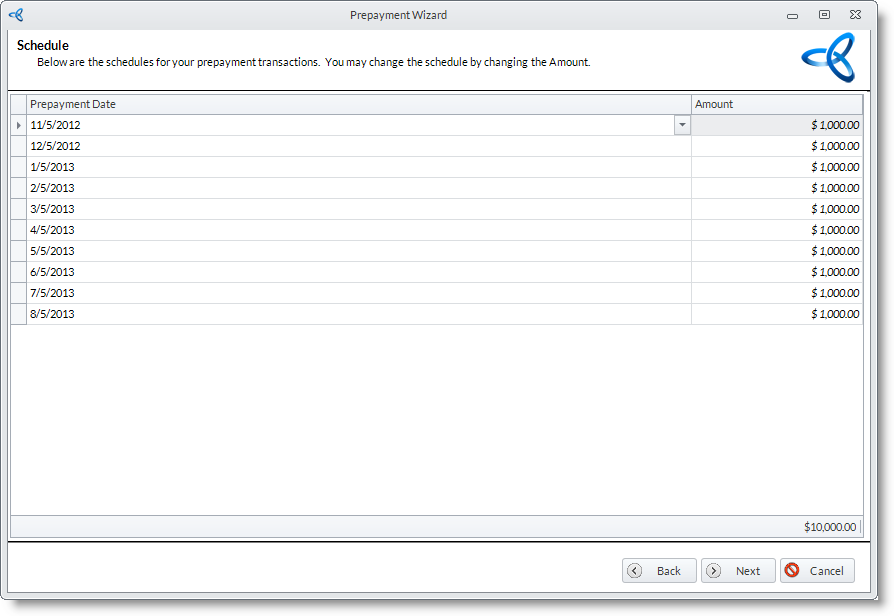
The schedule for the prepayment transaction and their corresponding amounts will appear. You may change the dates and the amounts as needed. Click Next to continue.
Step 4
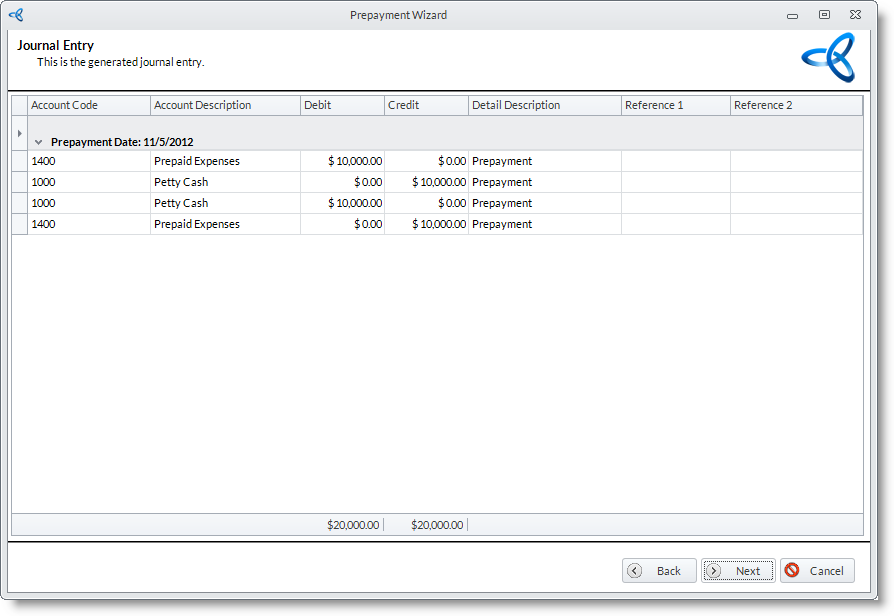
The actual journals to be done are listed in the wizard for completeness and will be saved to the unposted file. Click Next button to continue.
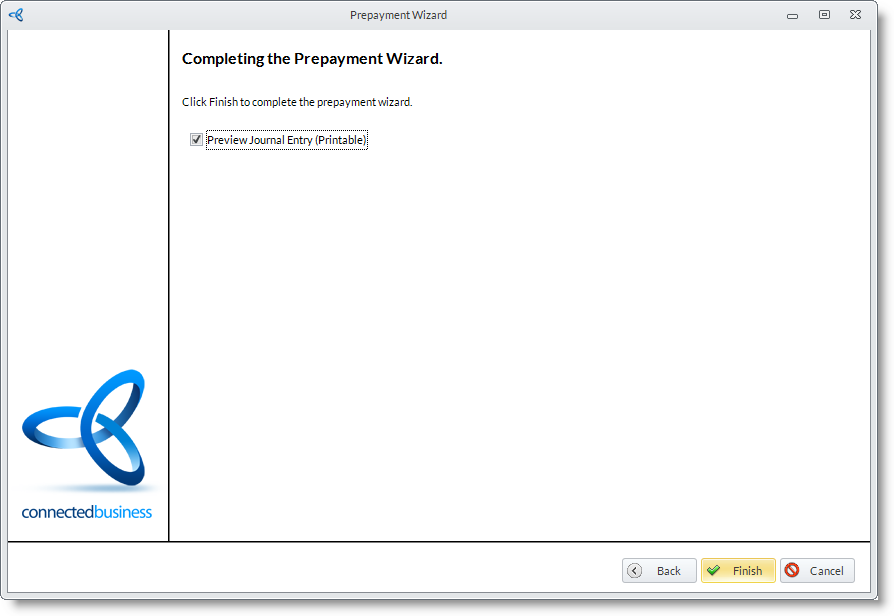
Step 5- You can choose to view the prepayment schedule you created. To view and close the wizard, click Finish button. The Print Preview of the created prepayment will display.
- From here you can print or send the Prepayment document.
- The Prepayment Code will be autogenerated.
